Designing a Secure and Maintainable Internal PKI
As enterprise IT environments evolve, the following trends are becoming standard:
- Full HTTPS adoption for internal systems
- Reverse Proxy and API Gateway architectures
- Microservices, Docker, and Kubernetes
- Zero Trust and encrypted internal networks
As a result, building an Internal Certificate Authority (Internal CA / Internal PKI) is no longer optional for medium-to-large enterprises.
However, many companies make the same mistake:
They can issue certificates — but they cannot operate a CA securely or sustainably.
This article explains best practices for building an enterprise-grade internal CA, focusing on security, operability, and long-term maintainability.
1. When Do You Actually Need an Internal CA?
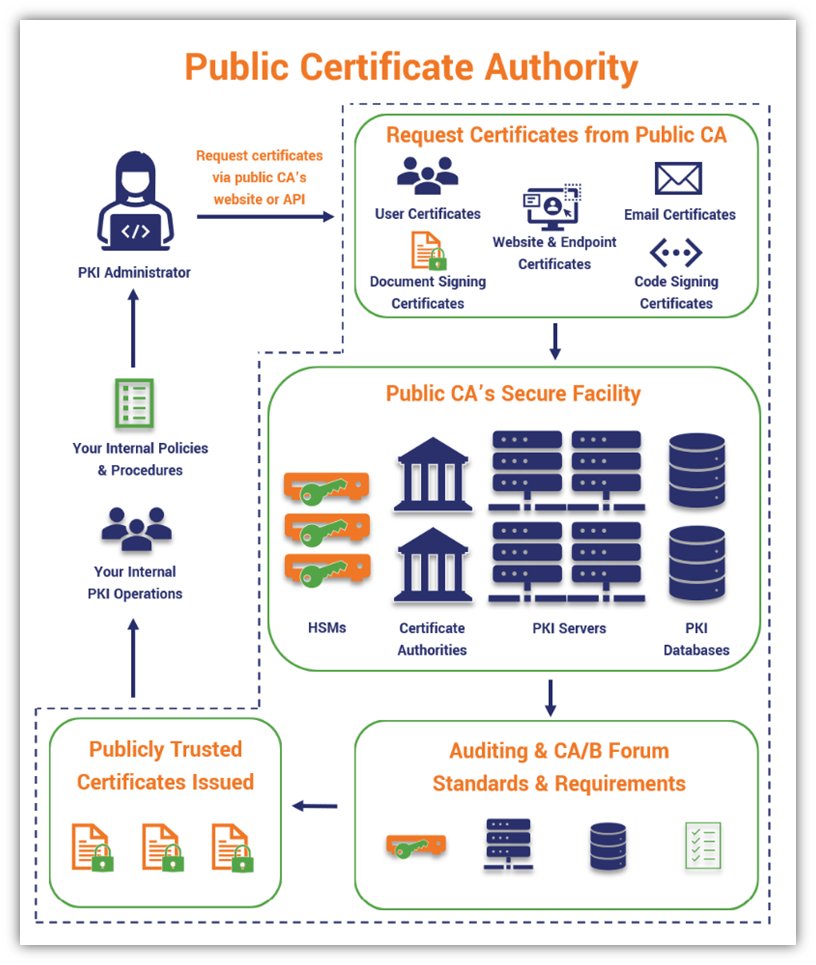
An internal CA is not meant to replace public CAs like Let’s Encrypt.
It exists to solve internal trust problems.
Common Use Cases
- Internal web systems (ERP, EIP, CRM, internal APIs)
- Reverse Proxy → Backend HTTPS
- VPN, internal LDAP / SMTP / IMAP TLS
- Kubernetes, service mesh, mTLS
- Device certificates (Wi-Fi, MDM, IoT)
👉 If the certificate is not consumed by public browsers, an internal CA is usually the correct choice.
2. Recommended Internal CA Architecture
Minimum Recommended Design: Two-Tier PKI
Offline Root CA
   │ (Signs Intermediate CA only)
   ▼
Intermediate CA
   │ (Issues server/client certificates)
   ▼
Internal Services / Clients
Why a Single-Tier CA Is Dangerous
- Root CA compromise = total trust collapse
- Root CA should never issue end-entity certificates
- Root CA should never be online
3. Root CA Best Practices (Most Critical)
✅ Keep the Root CA Offline
- Never installed on servers
- Never stored in VMs, containers, or NAS
- Recommended storage:
- Encrypted USB device
- Dedicated offline machine
- Multi-person control (dual custody)
✅ Strong Key Protection
- RSA ≥ 4096 or ECC P-384
- Private key must be encrypted
- Never automate Root CA usage
✅ Long but Controlled Validity
- 10–20 years is normal
- Root CA should be used very rarely
4. Intermediate CA Best Practices (Operational Core)
The Intermediate CA is the workhorse of your PKI.
Recommended Characteristics
- RSA 2048 / 3072 or ECC P-256
- Validity: 3–5 years
- Can be online
- Can be partially automated
Risk Management
- Intermediate CA compromise → revoke and replace
- Root CA remains secure and trusted
👉 This separation is what makes enterprise PKI survivable.
5. Certificate Issuance Policy (Do Not Skip This)
1️⃣ Never Issue “Wildcard Internal Certificates”
❌ *.corp.local
❌ *.internal
Why?
- One leaked certificate compromises the entire internal network
2️⃣ Precise SAN Only
- Include only required DNS names
- Avoid convenience-driven over-inclusion
3️⃣ Enforce Least Privilege
- Server certificates ≠ Client certificates
- TLS ≠ Code signing
- VPN ≠ Web services
👉 Certificate purpose must be strictly separated.
6. Certificate Lifetime and Rotation Strategy
Recommended Lifetimes
| Certificate Type | Validity |
|---|---|
| Root CA | 10–20 years |
| Intermediate CA | 3–5 years |
| Server certificates | 90 days – 1 year |
Why Shorter Lifetimes Matter
- Limits damage from key compromise
- Reduces exposure to cryptographic weaknesses
- Forces you to build renewal automation
7. Trust Deployment Best Practices
Do Not Distribute Root CA Blindly
- Not every server needs the Root CA
- Trust should be purpose-driven
Correct Approach
- Reverse proxies trust only required CAs
- Docker images include only necessary CA files
- Avoid adding Root CA to all employee devices unless absolutely required
8. Revocation (CRL / OCSP): Practical View
Enterprise Reality
- Internal systems often do not check revocation in real time
- That is acceptable if you have:
✔ A CRL publishing mechanism
✔ A documented revocation procedure
✔ A clear incident response plan
👉 Process matters more than perfect technical enforcement.
9. Common Internal CA Mistakes
❌ Root CA stored on servers
❌ One certificate reused everywhere
❌ Certificates valid for 10+ years
❌ Unencrypted private keys
❌ No certificate inventory
❌ “Rebuild everything” as the only recovery plan
If any of these apply, your CA is already a risk.
10. Enterprise Internal CA Checklist
✅ Root and Intermediate separation
✅ Offline Root CA
✅ Clear certificate purpose classification
✅ Defined validity and rotation policy
✅ Certificate inventory and ownership
✅ Controlled access and personnel separation
✅ Documentation and handover readiness
Conclusion: Internal CA Is a Trust System, Not a Tool
The most important lesson about enterprise internal CA design is this:
PKI is about managing trust, not running OpenSSL commands.
The tools you choose (OpenSSL, AD CS, cloud PKI) matter far less than:
- Architecture
- Policy
- Process
- Discipline
When designed correctly, an internal CA becomes the foundation for:
- Secure HTTPS reverse proxy
- mTLS and service mesh
- Zero Trust architectures
- Hybrid and multi-cloud security
When designed poorly, it becomes a single point of catastrophic failure.