From Network Perimeters to Identity and Trust Enforcement
Traditional enterprise security architectures were built on a simple assumption:
Once you are inside the network, you are trusted.
That assumption no longer holds true in modern environments where the following are now common:
- Remote and hybrid work
- SaaS and cloud services
- VPN credential leakage and misuse
- Docker and microservices
- Lateral movement attacks inside internal networks
This is why Zero Trust is no longer a buzzword—it has become a practical architectural direction.
And within a Zero Trust architecture, the Reverse Proxy plays a far more critical role than most people realize.
1. What Zero Trust Really Means (Enterprise View)
Zero Trust can be summarized in one sentence:
Never trust, always verify.
Access is granted based on verification, not network location.
Zero Trust does NOT mean:
❌ You must move everything to the cloud
❌ You must buy expensive security appliances
❌ You must redesign everything at once
Zero Trust focuses on:
- Who is the user or service?
- Is the device trustworthy?
- Is this request allowed right now?
- Can trust be continuously re-evaluated?
2. The Role of Reverse Proxy in Zero Trust
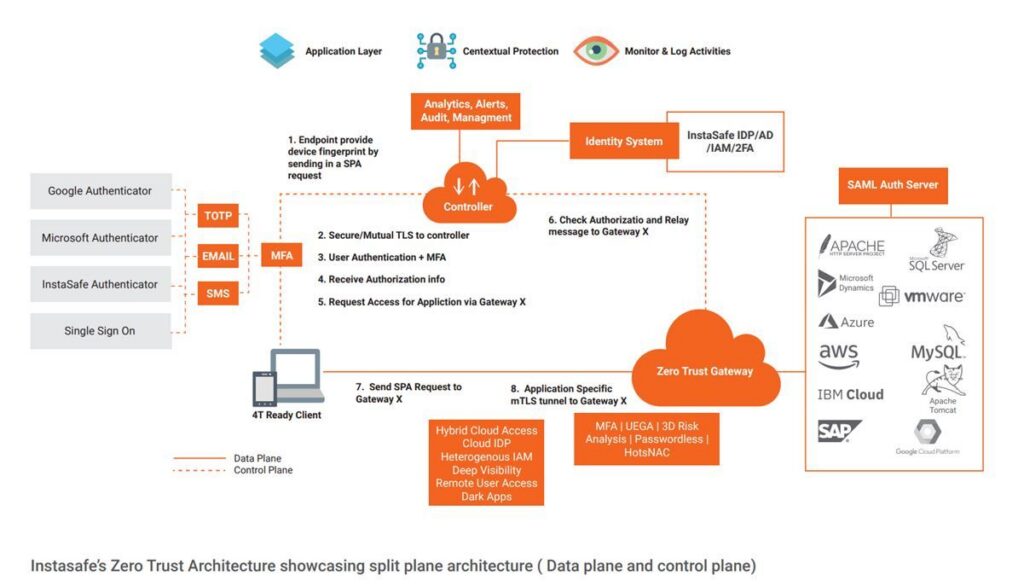
Traditional Model
User ── VPN ── Internal Network ── Services
Problems:
- VPN grants broad internal access
- Excessive trust
- Large attack surface
- Easy lateral movement
Zero Trust Model (Reverse Proxy–Centric)
User
 │
 ▼
Identity / MFA / Device Check
 │
 ▼
Reverse Proxy (Policy Enforcement Point)
 │
 ▼
Specific Backend Service
👉 The Reverse Proxy becomes the trust gateway.
3. Why Reverse Proxy Fits Zero Trust So Well
1️⃣ Reverse Proxy Is a Natural Control Point
A Reverse Proxy already:
- Sits in front of all services
- Terminates TLS
- Sees every request
This aligns perfectly with the Zero Trust concept of a
Policy Enforcement Point (PEP).
2️⃣ Centralized Identity and Authentication
A Reverse Proxy can integrate with:
- SSO / Identity Providers (Azure AD, Keycloak)
- Multi-Factor Authentication (MFA)
- Client certificates (mTLS)
- Device posture checks (advanced scenarios)
Backend services no longer need to implement authentication individually.
3️⃣ Complete Backend Isolation
In a Zero Trust design:
- Backend services are never directly exposed
- They may not even be accessible from the internal network
- Only the Reverse Proxy can reach them
👉 This dramatically reduces the attack surface.
4. What the Reverse Proxy Enforces in Zero Trust
1️⃣ Identity Verification (Who)
- User identity
- Service identity
- API tokens or client certificates
2️⃣ Device Verification (What)
- Corporate-managed device
- Security posture (advanced use cases)
3️⃣ Authorization (Can)
- Which user
- Which service
- Which URL or API
- Under what conditions
4️⃣ Continuous Verification (Always)
- Session expiration
- Token renewal
- Behavioral anomaly detection (advanced)
5. Reverse Proxy + Internal PKI: A Zero Trust Foundation
Why HTTPS Is Mandatory—Even Internally
Zero Trust assumes:
- Every connection must be verifiable
- Every hop must be protected
This means:
- Reverse Proxy → Backend must use HTTPS
- Certificates must be validated
- Internal PKI is required
👉 Plaintext “trusted internal networks” are incompatible with Zero Trust.
6. Typical Zero Trust + Reverse Proxy Architecture
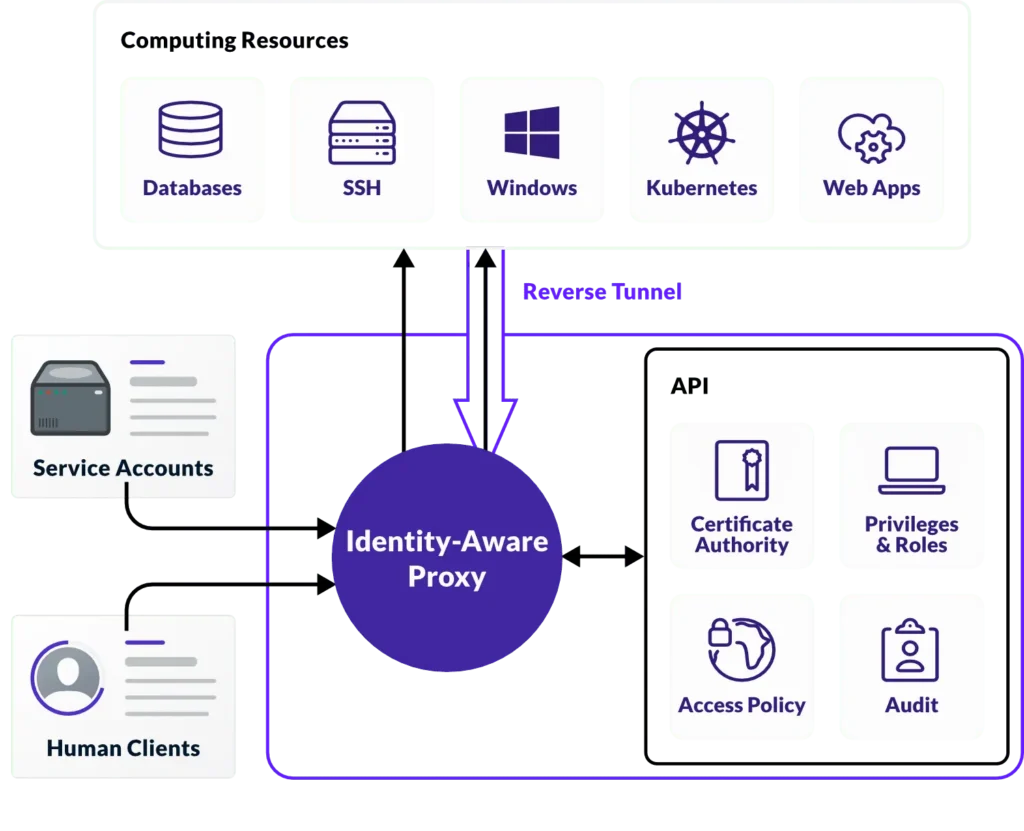
User
│ HTTPS + MFA
▼
Reverse Proxy
│ HTTPS + Internal CA / mTLS
▼
Backend Services
Common verification combinations:
- User SSO + MFA
- Device certificates
- Service-to-service mTLS
7. A Practical Zero Trust Adoption Path
Phase 1: Entry Point Consolidation
- All internal services exposed only via Reverse Proxy
- Backend services are no longer directly reachable
Phase 2: Centralized Identity
- Reverse Proxy integrates with SSO / MFA
- Backend authentication logic is simplified or removed
Phase 3: Internal PKI and HTTPS Everywhere
- Proxy-to-backend HTTPS
- Certificates are verifiable and revocable
Phase 4: Fine-Grained Authorization
- Access control at URL / API level
- Least-privilege enforcement
Phase 5 (Advanced): mTLS and Device Trust
- Client certificates
- Strong service identities
8. Common Misconceptions About Zero Trust
❌ VPN equals Zero Trust
❌ SSO alone equals Zero Trust
❌ Complex firewall rules equal Zero Trust
👉 Zero Trust is about dynamic verification and minimal authorization—not tools.
9. Reverse Proxy Technology Choices (Zero Trust View)
| Component | Recommendation |
|---|---|
| Reverse Proxy | Apache / Nginx / Envoy |
| Identity | Azure AD / Keycloak |
| Certificates | Internal PKI |
| mTLS | Introduce gradually |
| Logging | Proxy-centric |
Conclusion: Zero Trust Is About Trust Convergence, Not Revolution
Zero Trust does not require tearing everything down.
Its real value lies in:
Centralizing trust, making it verifiable, and enforcing it consistently.
The Reverse Proxy is the most practical and effective enforcement point for Zero Trust in enterprise environments.
If you already have:
- Reverse Proxy
- HTTPS
- Internal PKI
Then you are much closer to Zero Trust than you might think.