When HTTPS Is About Identity Verification, Not Just Encryption
After enterprises deploy an Internal CA / PKI, a common and dangerous situation often appears:
“All our traffic is HTTPS, so we must be secure… right?”
A closer inspection usually reveals uncomfortable truths:
- Some systems encrypt traffic but never verify certificates
- Some reverse proxies terminate TLS without validating backend identity
- Internal CAs are over-trusted or blindly trusted
- Security teams assume PKI is working—when it is not
In Reverse Proxy + Internal PKI architectures,
the difference between Apache and Nginx is not performance — it is trust behavior.
This article compares Apache vs Nginx from a real-world Internal CA / PKI perspective, focusing on what actually happens in production.
1. What Role Does Internal PKI Play in a Reverse Proxy?
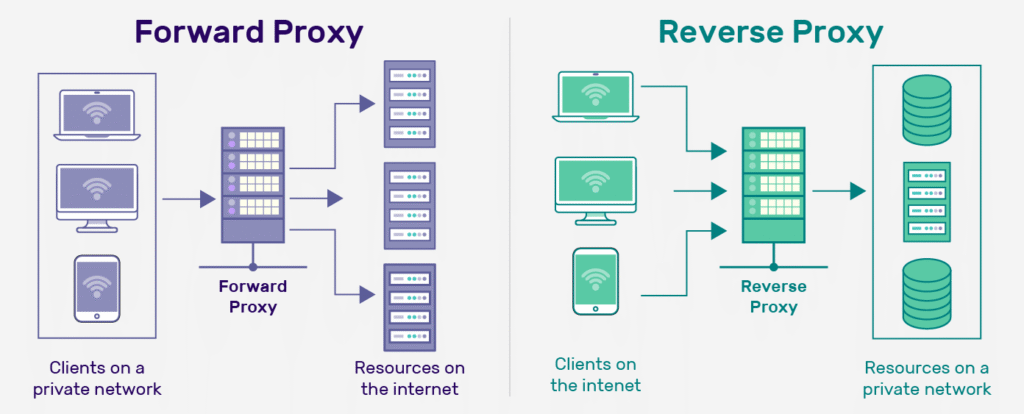
In a typical reverse proxy setup:
Client ──HTTPS──> Reverse Proxy ──HTTPS──> Backend
The reverse proxy plays two roles simultaneously:
- TLS Server for clients
- TLS Client for backend services
👉 Internal PKI matters most in the “Proxy → Backend” connection
This is where identity verification either happens—or silently does not.
2. Architecture Overview (Practical Scenario)
User
│ HTTPS (Public Certificate)
▼
Reverse Proxy (Apache / Nginx)
│ HTTPS (Internal CA)
▼
Backend Services
The real question is not “Is HTTPS enabled?”
It is:
Is the proxy actually verifying the backend’s identity?
3. Apache: The “Strict-by-Design” PKI Approach
3.1 Apache’s TLS Philosophy
Apache treats HTTPS reverse proxy connections as real TLS client sessions.
Its design philosophy is simple:
If TLS is used, verification should be explicit and controllable.
This makes Apache particularly well-suited for enterprise Internal PKI environments.
3.2 Apache + Internal CA: Practical Configuration
SSLProxyEngine On

SSLProxyVerify require
SSLProxyCheckPeerName on
SSLProxyCheckPeerExpire on

SSLProxyCACertificateFile /etc/apache2/ssl/internal-ca.pem

ProxyPass /api https://backend-api.internal/
ProxyPassReverse /api https://backend-api.internal/
What Apache Actually Verifies
- The backend certificate is issued by the Internal CA
- The certificate SAN matches the hostname
- The certificate is not expired
👉 This is real PKI usage, not cosmetic HTTPS
3.3 Apache Strengths (PKI Perspective)
✅ Clear verification semantics
✅ Explicit trust configuration
✅ Predictable Internal CA behavior
✅ Readable and actionable error logs
Best suited for:
- Enterprise internal networks
- Self-managed PKI
- Zero Trust–oriented designs
4. Nginx: Powerful, Flexible—and Easy to Misuse
4.1 Nginx Default Behavior (Often Misunderstood)
When proxying to an HTTPS backend:
Nginx does NOT verify backend certificates by default
This means:
- Traffic is encrypted
- Identity is not validated
- Man-in-the-middle attacks are theoretically possible
In an Internal PKI environment, this is a critical risk.
4.2 Nginx + Internal CA: Correct (Mandatory) Configuration
proxy_ssl_verify on;
proxy_ssl_trusted_certificate /etc/nginx/internal-ca.pem;
proxy_ssl_server_name on;
Missing any of these directives silently degrades security.
4.3 Common Nginx PKI Pitfalls
❌ Assuming HTTPS automatically means verification
❌ Forgetting to enable proxy_ssl_verify
❌ Over-trusting CA bundles
❌ Proxy reload failures affecting all services
👉 Nginx is not insecure — it is permissive
5. PKI Behavior Comparison Summary
| Aspect | Apache | Nginx |
|---|---|---|
| Backend cert verification default | Strict by design | Disabled by default |
| Internal CA support | Native and explicit | Manual and error-prone |
| SAN verification | Clear controls | Easy to forget |
| Configuration readability | High | Medium |
| Misconfiguration risk | Low | High |
| Enterprise PKI suitability | High | Depends on team maturity |
6. Practical Enterprise Recommendations
Choose Apache if:
- You operate an Internal PKI
- Identity verification matters more than raw throughput
- Multiple admins maintain the system
- You want to avoid “silent insecurity”
Choose Nginx if:
- Your team deeply understands TLS and PKI
- Configuration reviews are strict
- You are fully aware of default behaviors
👉 Nginx is powerful—but requires discipline.
7. Zero Trust Perspective (Critical Insight)
Zero Trust security is built on one rule:
Every connection must verify identity
If a reverse proxy:
- Encrypts traffic
- But does not verify backend certificates
Then that connection does not meet Zero Trust requirements.
From this perspective:
- Apache aligns naturally with Zero Trust principles
- Nginx can align—but only with deliberate configuration
8. Final Takeaway
The value of Internal PKI is not how many certificates you issue —
it is whether identities are actually verified.
The real difference between Apache and Nginx is not speed or syntax, but:
- Their default trust assumptions
- Their resistance to silent misconfiguration
In enterprise environments, avoiding “quietly broken security” is often more important than achieving maximum throughput.