Moving from Encryption to Mutual Identity Verification
After enterprises successfully deploy HTTPS and an Internal PKI, a critical question almost always follows:
“Do we need mTLS?”
Mutual TLS (mTLS) is often viewed with mixed feelings:
- Security teams appreciate its strong identity guarantees
- Operations teams worry about certificate sprawl and complexity
The truth is:
mTLS is not an all-or-nothing decision.
It is an enterprise capability that can be adopted incrementally and safely.
This article explains how mTLS is actually deployed in real enterprise environments, focusing on what works, where to start, and how to avoid common failures.
1. What Is mTLS? (Enterprise Perspective)
Standard TLS (HTTPS)
Client ──▶ Server
        Server identity is verified
- Client verifies the server
- Server does not verify the client
Mutual TLS (mTLS)
Client ◀──▶ Server
   Both sides verify certificates
- Client verifies the server
- Server verifies the client
- Both sides have cryptographic identities
👉 In simple terms:
mTLS replaces “network-based trust” with certificate-based identity.
2. Why Enterprises Actually Need mTLS Internally
In many internal environments, access control still relies on:
- IP allowlists
- VLANs or subnets
- “Trusted internal networks”
These approaches break down in:
- Docker and Kubernetes
- Hybrid and multi-cloud environments
- Zero Trust architectures
- Microservices and APIs
mTLS directly addresses:
- Service impersonation
- Lateral movement attacks
- Unauthorized API usage
- Over-trusted backend services
3. Typical Enterprise mTLS Architectures

Service-to-Service mTLS
Service A (Client Certificate)
   │  mTLS
   ▼
Service B (Server Certificate)
Reverse Proxy–Centric mTLS (Most Common)
Client / Service
   │ mTLS
   ▼
Reverse Proxy
   │ mTLS
   ▼
Backend Service
4. What Enterprises Should NOT Do First
The fastest way to fail with mTLS is to enable it everywhere at once.
Common Failure Patterns
- Enabling mTLS for all services simultaneously
- No certificate lifecycle or rotation process
- Treating mTLS as a simple on/off switch
Results:
- Widespread outages
- Emergency disabling of verification
- mTLS labeled as “too complex”
5. A Practical, Phased mTLS Adoption Path
Phase 0: Mandatory Prerequisites
Before mTLS, enterprises must already have:
- A functioning Internal PKI (Root + Intermediate CA)
- Clear certificate purpose separation (server vs client)
- HTTPS with proper certificate verification
👉 Without correct TLS verification, mTLS is meaningless.
Phase 1: Reverse Proxy → Backend mTLS (Recommended Starting Point)
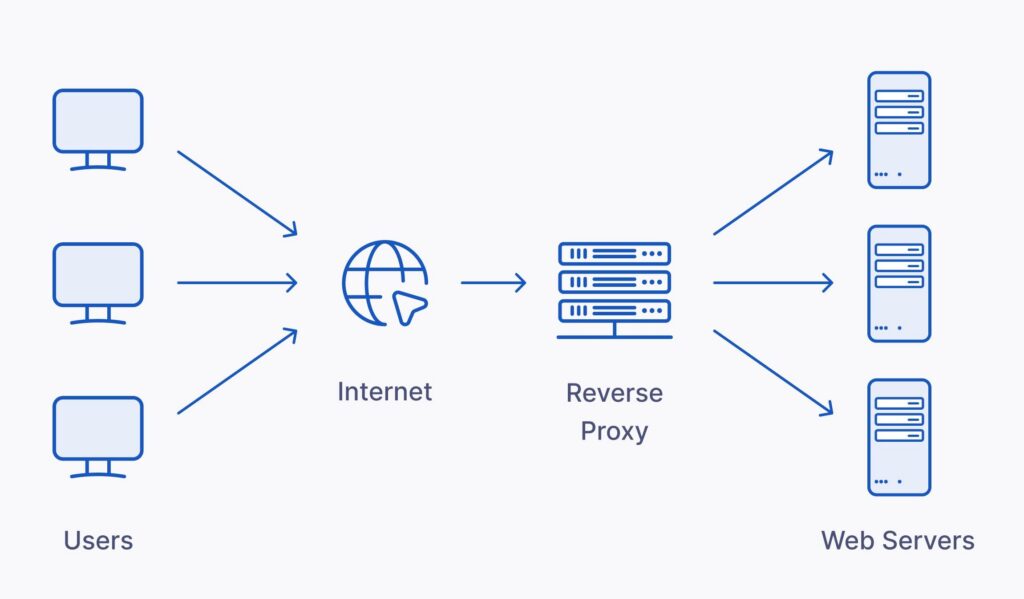
Why start here?
- Few connections
- Centralized control
- Easy rollback
How it works
- Backend services require client certificates
- Reverse Proxy presents a client certificate
- Backend trusts only specific CAs
👉 This alone blocks a large class of lateral attacks.
Phase 2: Service-to-Service mTLS (Core Value)
Service A ── mTLS ──▶ Service B
Key principles:
- One client certificate per service
- Certificates represent service identity
- No reliance on IP-based trust
Best suited for:
- API platforms
- Microservices
- Internal integration systems
Phase 3 (Advanced): User / Device mTLS
User Device (Client Certificate)
   │ mTLS
   ▼
Proxy / Gateway
Use cases:
- VPN replacement
- Device-level identity enforcement
- High-security internal systems
👉 This represents high Zero Trust maturity.
6. Enterprise Certificate Design Rules for mTLS
1️⃣ Separate Certificate Purposes
| Certificate Type | Purpose |
|---|---|
| Server Certificate | Hosting services |
| Client Certificate | Representing identity |
| CA Certificate | Trust anchor |
❌ Never reuse certificates across roles
2️⃣ Client Certificates Must Be Revocable
- Short lifetimes (90 days – 1 year)
- Clear renewal procedures
- Compromise ≠ full system failure
3️⃣ SAN Design Must Be Precise
- Service name
- Environment (prod, staging)
- Avoid wildcard identities
7. Common Enterprise mTLS Pitfalls
| Pitfall | Outcome |
|---|---|
| Enabling mTLS everywhere | Large-scale outages |
| Mixing client and server certs | Broken trust model |
| No expiration monitoring | Service disruption |
| No rollback plan | Verification gets disabled |
| Using mTLS as ACL | Architectural misuse |
8. mTLS and Zero Trust: The Real Relationship
Zero Trust is built on:
Identity, verification, and least privilege
mTLS provides:
- Strong machine and service identity
- Cryptographic authentication that cannot be spoofed
👉 mTLS is not the entirety of Zero Trust, but it is:
One of the strongest implementations of service identity in Zero Trust systems.
9. One-Sentence Enterprise Recommendation
Don’t ask “Should we use mTLS?”
Ask “Which connection most needs an unspoofable identity?”
Starting with:
- Reverse proxy → backend
- Critical APIs
- High-risk internal systems
already delivers significant security value.
Conclusion: mTLS Is a Capability, Not a Belief System
mTLS is not about making everything “more secure at all costs.”
It is about:
Applying strong identity verification where it matters most.
If your enterprise already has:
- An Internal PKI
- Correct TLS verification
- Clearly defined trust boundaries
Then mTLS becomes a natural extension, not a painful transformation.